

South east London GP Dr Emma Rowley-Conwy talks about why the London Care Record and Universal Care Plan are ‘must have’ tools that support her provide the best possible care for her patients (29 January 2026).
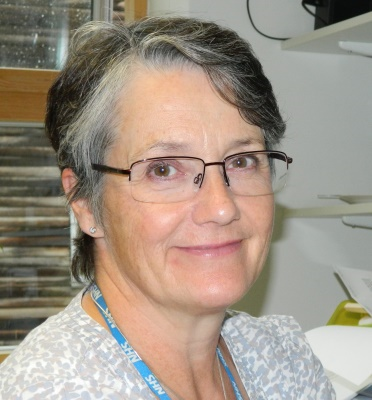
I’m a GP in Lambeth, and this November I’ll have been working here for 35 years. I’ve also held a number of other roles over the years. I’ve been on the LMC for a long time, spent six years as a PCN clinical director, and I’ve chaired the board for the out‑of‑hours service in south east London.
I’ve also always been a supporter of digital tools that genuinely help us do our jobs better. That comes partly from experience. If you’ve ever worked out of hours, you’ll know what it’s like trying to make the right decisions based on very little information. You’re seeing someone you’ve never met before, often late at night, and the clinical context just isn’t there. The London Care Record (LCR) was designed to solve exactly that problem, and in my view it does.
One version of the truth
In south east London we originally had a local care record that covered just our patch. When that grew into a pan‑London system, its usefulness increased enormously. People don’t neatly attend one hospital or live their whole lives in a single borough. Patients move, ambulance crews take them to the nearest A&E, and specialist care often happens miles away from where they’re registered.
In a typical GP surgery, I probably open the LCR two or three times, more when dealing with complex cases. That’s because so many questions can be answered instantly. A patient might say, “I had an echocardiogram in outpatients but I never heard the result.” I can look it up there and then. I might not be a cardiologist, but if it’s reported as normal I can reassure them straight away. That’s quicker and better for the patient.
We serve a population where many patients don’t have English as a first language, are highly mobile, or change phone numbers frequently. Letters get missed. Text reminders don’t land. Being able to see outpatient letters, test results and follow‑up plans on the LCR means I can explain clearly what’s happened and what’s supposed to happen next. That clarity is invaluable for patients.
Joining up care
One of the real strengths of the LCR is how it supports joined‑up care across services. The progress notes are particularly useful in mental health. I can often see who the patient’s care coordinator is, when they last tried to make contact, and what the plan is. Being able to say, “I can see your coordinator tried to call you on Tuesday and plans to call again,” helps patients feel care is more joined-up. If I’m concerned, I can contact the coordinator directly.
I regularly see patients who’ve been treated across multiple London trusts. One patient moved into the area with significant health anxiety and several long‑term conditions. His GP record was incomplete, so without the LCR I’d have been flying blind. Instead, I was able to do what I think of as “forensic crawling” and work out where he’d been seen, which trust it was, and what the plan actually was. This meant I didn’t duplicate referrals or repeat unnecessary tests.
Another patient presented with diarrhoea. By checking the LCR, I could see he’d had a colonoscopy six months earlier at a different London trust. He didn’t need another one and I could explain why.
The LCR gives us one version of the truth that we can all work from. It means GPs can genuinely support secondary care or other services, rather than constantly chasing or duplicating efforts. It also lets us reinforce messages patients may not have absorbed in other settings, where anxiety often means people only take in a fraction of what they’re told.
Saving time
There’s no question the LCR saves time, huge amounts of it. Queries that would once have generated tasks for my reception team, such as chasing letters or phoning hospitals for results, have probably reduced to around 10% of what they were before. Many questions can now be resolved during the consultation itself.
That’s not just easier for GPs. It is better for everyone. Fewer phone calls, fewer tasks, fewer frustrated patients waiting for answers that already exist somewhere else.
Why the Universal Care Plan really matters
The Universal Care Plan (UCP) is equally important. One patient who really brought this home to me was a child with very complex needs, under Great Ormond Street, who experienced crises requiring specific medications and rapid intervention. Her parents lived apart, so she could end up in A&E anywhere in London. The community paediatric team created a detailed UCP setting out exactly what to do in a crisis. Any clinician, in any A&E, could open it and immediately know the plan and who to contact at GOSH. As her GP, that was incredibly reassuring.
The same applies to adults with complex or palliative needs. People move around London. Ambulances don’t respect borough boundaries. In palliative care especially, there may be hospice nurses, hospital teams, night services, social workers and so on, all using different systems. The UCP cuts through that.
As an out‑of‑hours doctor, I’ve been called to nursing homes at night where the staff on duty might be agency and don’t know the resident and can’t find the notes. Having a digital care plan with even just basic information like next of kin, key contacts, or escalation plans makes a huge difference.
In learning disability care homes, where many residents can’t communicate for themselves, the UCP can be vital. Knowing how best to approach someone, what might distress them, or what helps them feel safe is so helpful in delivering personalised care.
Easy, intuitive, and worth it
My final point about the London Care Record is simple. It’s easy to use. It’s two clicks. Once you’re in, it’s intuitive. I can find what I need quickly to help me make the best decisions and provide the right care.
So my advice to any GP not using the London Care Record? Honestly, why would you want to work without information that is easily accessible? It doesn’t feel burdensome. It feels helpful every single time. And without it, you’d probably still be working at ten o’clock at night.
You can find out more about the London Care Record here.
You can find out more about the Universal Care Plan here.